


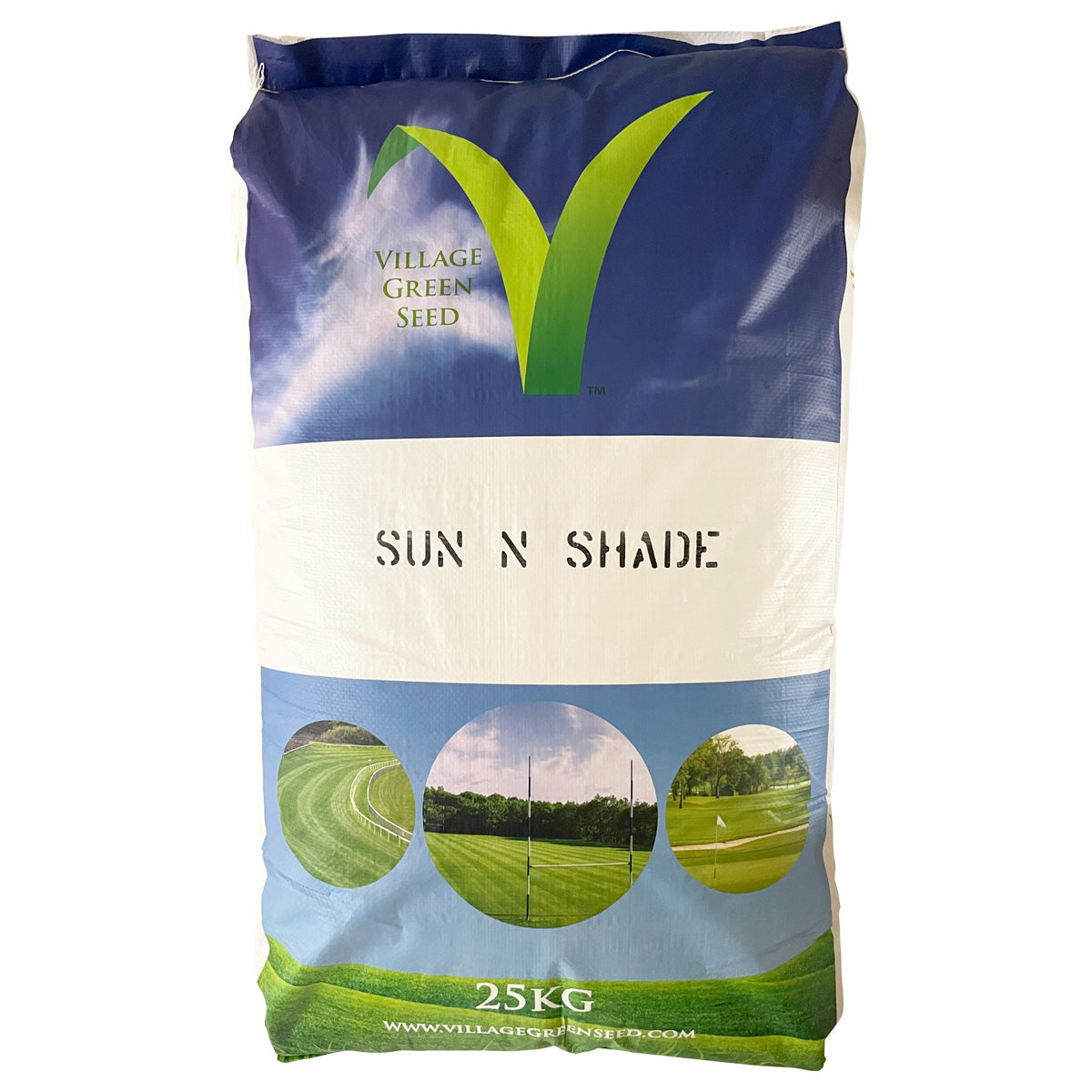
Sun n Shade Lawn Seeds
Description
Description
Contains: 60% Turf Tall Fescue, 20% Creeping Red Fescue, 10% Chewings Fescue, 10% Kentucky Bluegrass.
Sun n Shade is the ultimate lawn seed for areas in which the lawn is primarily in full sun, with partial shade coverage throughout the day.
Sun n Shade's biggest strength is its heat and drought tolerance, keeping lawns green through the height of summer. Tall Fescue brings a broader leaf and rich, dark green colour. Creeping Red Fescue and Chewings Fescue are finer in texture and handle shade well. Kentucky Bluegrass also copes with moderate shade, and spreads via rhizomes just below the surface, blending the lawn together and improving overall thickness and appearance.
Reviews
Reviews


Have a question?
Notified by email when this product becomes available

Pros
- Provides full sun and shade tolerance.
- Very dark green and attractive.
- It produces a very dense canopy from its various grass species.
- Requires less water and fertilisation.
- Better survival during long, hot summers with only occasional irrigation.
Cons
- It can take longer to germinate and establish than other species types such as Ryegrass.
- The Tall Fescue component requires warm conditions to germinate and establish, typically from 12° C to 25° C soil temperature.
- Not necessarily a con, but Sun n Shade mix is best mown at 50mm or higher for the best performance.
Recommended products
FAQs
No. Sun n Shade is designed for areas mostly in full sun with only partial shade during the day. For lawns in deeper or more consistent shade, browse our Fine Fescue grass seed range, which copes better with low light.
It can take longer to establish than Ryegrass, since the Tall Fescue component needs warm soil, typically between 12°C and 25°C, to germinate well. A seed spreader helps get even coverage during sowing, which supports more consistent germination.
Very little. Its heat and drought tolerance mean it can survive long, hot summers with only occasional irrigation. A wetting agent can help further by improving how water moves through the soil during dry spells.
50mm or higher. Mowing shorter than this will affect how well the lawn performs. Check our Lawn Care range for tools and products to keep it in top condition.
Each does a different job: Tall Fescue gives heat tolerance and dark green colour, Creeping Red and Chewings Fescue handle the shaded areas, and Kentucky Bluegrass spreads via rhizomes to knit the lawn together and thicken it out. Feeding the lawn well also supports this process, so it's worth pairing Sun n Shade with the right lawn fertiliser.